Menu


The Evolution of Payment Encryption in Card Terminals: Past, Present, and Future
By John Misarti May 14, 2025
Most customers find using a card to make payments to be easy, but decades of security advancements go into that smooth transaction. The techniques for safeguarding private payment information have changed dramatically since the days of manual card imprinters and have continued to evolve with the development of contactless terminals and encrypted chip readers. Encryption, the unseen barrier that protects cardholder data from fraud and interception, is at the center of this journey.
Knowing the payment encryption history helps put our current situation in perspective and provides insight into what lies ahead. Understanding how card terminal encryption is evolving helps consumers, technology providers, and business owners alike establish trust and be ready for the future of safe payments.
Early Days of Card Security
When credit cards first entered mainstream use in the 1950s and 60s, security was almost nonexistent. Merchants used manual imprinters to create carbon copies of cards, which were then processed through physical paperwork and phone calls. There was no encryption. Data was printed visibly and could be easily read or copied.
In the 1970s, magnetic stripe technology emerged, allowing terminals to read account data encoded on the back of the card. This marked an advancement in convenience but not in security. The data stored on magstripes was static, making it easy for criminals to clone cards if they gained access to the information. These systems offered speed but lacked proper encryption.
The introduction of online authorization helped reduce some fraud, but without true encryption, data was still exposed in transit. The rise in card fraud during this time prompted a push for more sophisticated solutions and laid the groundwork for modern payment encryption history.

Introduction of PIN and Offline Encryption
PIN-based verification was introduced in the 1980s and 1990s, particularly in debit card and ATM systems. The systems still required stronger encryption to safeguard the data transferred between banks and card terminals, even though PINs provided an additional layer of user authentication.
Basic data scrambling techniques were implemented in point-of-sale systems as offline encryption techniques started to emerge. Due to their basic nature and lack of standardization, these early methods’ efficacy differed greatly depending on the bank or vendor.
Consistent, end-to-end protection was obviously required. The need for safe, scalable encryption techniques that could function across networks and geographical boundaries increased along with the volume and complexity of electronic card transactions.
EMV and the Birth of End-to-End Encryption
A major turning point came with the development of EMV chip technology in the early 2000s. Named after Europay, Mastercard, and Visa, EMV chips embedded cryptographic keys into physical cards. Unlike magstripes, EMV chips generate a unique code for each transaction, making it nearly impossible to reuse stolen data. This advance marked a new era in payment encryption history. Encryption was now part of the transaction process itself, not just a security layer around it. Terminals had to be upgraded to support chip reading and real-time data processing with encrypted payloads.
The next leap came in the form of point-to-point encryption, or P2PE. With this system, card data is encrypted at the moment it is captured in the terminal and remains encrypted until it reaches the payment processor. This greatly reduced the risk of interception during transmission. End-to-end encryption has since become a gold standard, offering merchants and consumers a secure framework for processing payments. It laid the groundwork for current encryption trends and continues to evolve with the introduction of tokenization and cloud-based security models.
Tokenization and Contactless Transactions
One of the most significant advancements in card terminal encryption is tokenization. Modern systems use randomly generated tokens that are useless to attackers in place of sending actual card numbers. The token cannot be linked to the original card or used in another transaction if it is stolen.
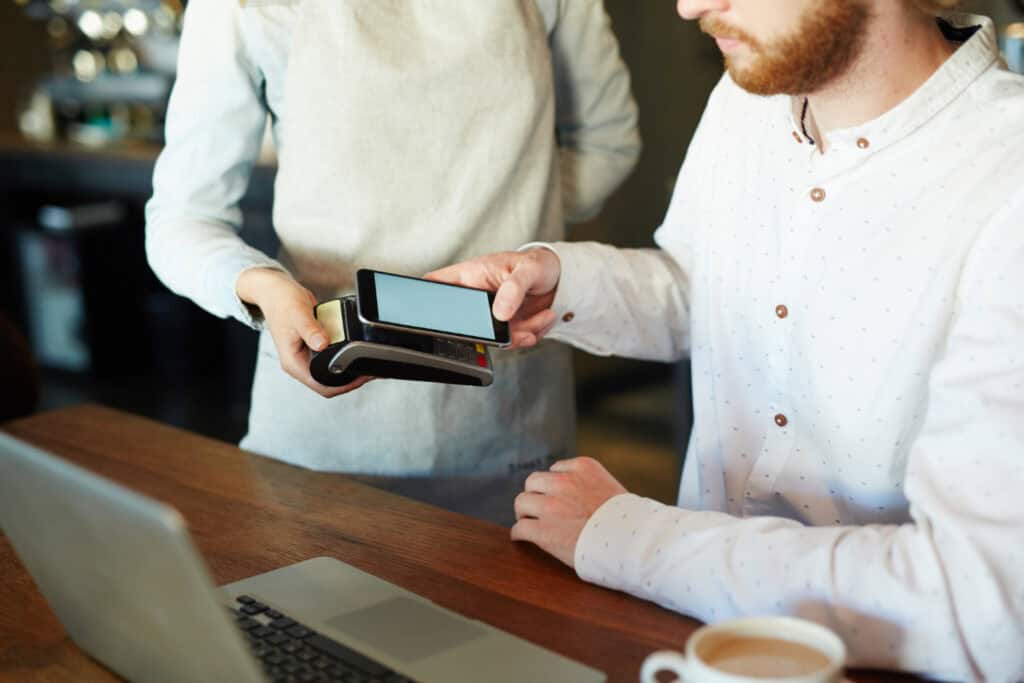
This technique offers an additional degree of security and is particularly helpful for mobile payments and e-commerce. Tokenization is a key component of digital wallets like Apple Pay, Google Pay, and others that enable safe and easy transactions. At the same time, contactless payments have become more and more popular. To finish a transaction, cardholders can use NFC technology to tap their phone or card on a reader. Compared to conventional magstripe techniques, these systems are encrypted, authenticated, and generally more secure.
The growing use of tokenization and contactless transactions illustrates a significant shift in encryption trends, as the industry moves toward real-time, risk-aware payment systems that operate invisibly to the user while keeping data fully protected.
Compliance Standards Driving Encryption Innovation
Regulations and compliance frameworks have played a crucial role in shaping the development of card terminal encryption. The most notable is the PCI DSS, which outlines requirements for protecting cardholder data.
These guidelines push merchants and payment processors to adopt encryption practices that reduce the scope of PCI audits and limit exposure in the event of a breach. Technologies like P2PE and tokenization help organizations meet these standards by ensuring that sensitive data is not stored or transmitted in plain text.
Beyond PCI, global data privacy laws such as the GDPR and California’s CCPA have emphasized the importance of data encryption as part of broader information security practices. As enforcement becomes stricter, the incentive to adopt advanced encryption becomes stronger. An optimized approach to compliance helps businesses reduce liability, avoid fines, and protect their reputations, all while contributing to the future of secure payments.
Cloud-Based Terminals and Software Encryption
Cloud-connected systems represent the next frontier in card terminal encryption. Fixed lines and outdated infrastructure are no longer used by many contemporary terminals. Rather, they interact directly with safe cloud environments that control updates, authentication, and encryption. Cloud-based terminals have a number of benefits. They eliminate the need for local data storage, are easier to update to counter new threats, and can easily integrate with mobile apps or e-commerce platforms.
Since encryption in this context is often software-driven, patches and updates can be applied without requiring the replacement of actual hardware. Additionally, it makes it possible to centrally manage encryption keys, which lowers the possibility of key exposure or improper handling. As payment environments continue to blur the line between physical and digital, software-based encryption is expected to play a major role in securing omnichannel commerce.
Emerging Threats and Ongoing Innovation
Despite the progress made, encryption must continue to evolve. Cyber threats are constantly adapting, and criminal networks are investing in sophisticated tools to intercept or manipulate payment data. One emerging threat is the use of malware targeting POS systems directly. These attacks often seek to exploit software vulnerabilities or extract data before it is encrypted. To defend against this, vendors are implementing hardware-based security modules, endpoint protection, and behavioral monitoring.
Another trend is the rise of quantum computing, which poses a potential risk to current cryptographic algorithms. While still years away from practical impact, the industry is already researching post-quantum encryption methods that could withstand such threats. These challenges highlight the importance of continued investment in encryption innovation. As payment environments grow more complex, the future of secure payments depends on layered security models, constant monitoring, and proactive threat detection.
The Role of User Awareness and Behavior
Technology is insufficient on its own. The effectiveness of encryption is significantly influenced by human behavior. Even the most advanced systems can be compromised if employees use weak passwords, neglect software updates, or disregard terminal warnings. Just as crucial as installing encrypted terminals is educating staff members on how to spot phishing attempts, follow safe procedures, and report irregularities. Companies need to cultivate a culture of alertness where everyone takes responsibility for security.
At the consumer level, fraud risk can be decreased by knowing how to use contactless payments, protect card information, and confirm secure transactions. Users can be empowered to take part in the security process through education campaigns and clear messaging from payment providers. Encryption is the foundation, but people must be the gatekeepers who ensure that it works as intended.
What the Future Looks Like
The future of secure payments is being shaped by innovation across multiple fronts. Biometric authentication, such as fingerprint or facial recognition, is being integrated into more payment systems to reduce reliance on physical cards. These methods add security while improving convenience. Artificial intelligence is being used to detect fraud patterns in real time, allowing payment systems to respond dynamically to threats. Combined with encrypted terminals, AI helps create an intelligent security layer that protects data without slowing down transactions.
Expect to see more convergence between hardware and software, with smart terminals that can adapt, learn, and update remotely. This flexibility is essential as businesses expand into new markets and adopt new payment formats. Finally, collaboration across the industry is becoming more important. Encryption standards are being developed collectively, with banks, merchants, and tech providers working together to maintain trust in global commerce.
Conclusion
Since the days of magnetic stripes and manual card imprinters, encryption has advanced significantly. Modern card terminals are outfitted with advanced cryptographic systems that safeguard private information throughout the transaction. The history of payment encryption, from chip-based EMV to cloud-connected contactless readers, demonstrates the industry’s dedication to safety and innovation. Organizations must continue to be proactive, informed, and flexible as new trends in encryption continue to emerge. Technology alone won’t be enough to ensure safe payments in the future; vendors, merchants, and customers must all work together to uphold high standards and ward off threats.


Leave a Reply