Menu

Understanding Point-to-Point Encryption (P2PE) in Credit Card Processing
By John Misarti May 30, 2025
With credit card transactions now being a primary mode of payment across industries, protecting customer data has become a critical concern. From retail counters to mobile checkouts, businesses are handling sensitive card information daily. In this environment, security breaches are not just a financial threat but a reputational one. This is where P2PE, or Point-to-Point Encryption, plays a central role.
According to the P2PE security standard, card information is encrypted as soon as it is received by a payment device and stays encrypted until it reaches a secure endpoint. Preventing unwanted parties from reading or intercepting the data while it is being transmitted is the aim. P2PE, in contrast to general encryption techniques, is validated by the Payment Card Industry standards and is specifically made for payment environments.
What Is P2PE
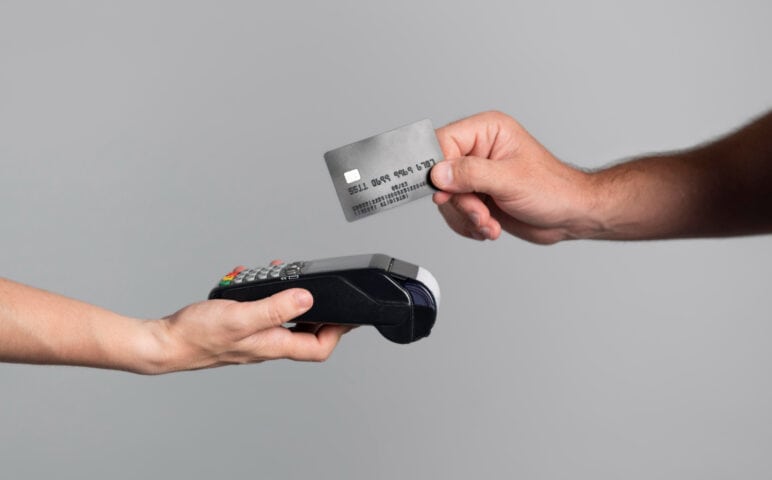
P2PE is a security technique that encrypts cardholder data at the point of interaction and keeps it encrypted throughout its journey to the payment processor. The process starts the moment a card is swiped, inserted or tapped on a terminal.
In a P2PE system, the payment terminal encrypts the card data using a secure encryption algorithm and sends it through the payment network. The data is only decrypted once it reaches a trusted and certified endpoint, typically the payment processor. This means that even if hackers intercept the transmission, they cannot make sense of the encrypted data.
Since hardware-based encryption is the technology’s foundation, security features are integrated into the actual payment device. To protect the integrity of the transaction, these encrypted card terminals employ tamper-resistant designs and distinct encryption keys. P2PE should not be confused with end-to-end encryption, which sometimes refers to a less precise or inconsistent procedure. With stringent requirements for encryption, key management, and device integrity, P2PE is a formalised security framework that has been validated by PCI.
Why P2PE Is Needed in Payment Environments
Payment systems are attractive targets for cybercriminals. Cardholder data, once compromised, can be used for unauthorized purchases or sold on the dark web. High-profile breaches in retail and hospitality industries have shown how damaging a lack of security can be.
Traditional encryption methods often protect data in transit, but they may not secure it from point of entry. This leaves a gap where malware or compromised systems can extract card data before encryption takes place.
P2PE closes this gap by encrypting data immediately within the terminal. This prevents it from being accessible to software or network vulnerabilities that exist downstream. For merchants, it means fewer points of exposure and significantly reduced risk. By creating a secure payment infrastructure using P2PE, businesses not only safeguard customer information but also streamline their compliance with PCI DSS, the security standard for payment data. This reduces the complexity and cost of audits and demonstrates a commitment to high-level security practices.

How P2PE Works Step by Step
Understanding how P2PE functions requires looking at the transaction flow and the security features built into the process. When a customer presents a credit or debit card, the terminal captures the cardholder data. This includes the card number, expiration date and other identifiers required for the transaction.
The terminal immediately uses a robust cryptographic algorithm to encrypt the data. This encryption takes place within the terminal’s secure hardware. It is impossible to remove or alter the pre-installed encryption keys. These keys belong to a broader managed key system that is under the P2PE provider’s control and are specific to each device. The encrypted data is then transmitted over the merchant’s network, but even in the event that the network is compromised, it is safe because it cannot be decrypted without the matching decryption key.
Once the encrypted data reaches the payment processor, it is decrypted within a certified decryption environment. The processor verifies the transaction and communicates the approval or decline to the merchant. Throughout this process, the data is never exposed in an unencrypted form. This is the central promise of P2PE and what differentiates it from less rigorous methods.
The Role of Encrypted Card Terminals
Encrypted card terminals are the frontline tools in a P2PE system. These are payment devices designed with hardware-level security features and certified for P2PE compliance. They not only handle encryption but also ensure that the encryption keys are stored securely and are not accessible through software or physical tampering.
Strict PCI standards are followed in the manufacturing of these terminals, and they are regularly assessed to guarantee ongoing compliance. If tampering is detected, they frequently have self-destruct mechanisms that disable the device and guard against data compromise. By using these terminals, you can be sure that every card read is secure right away. Encrypted terminals guarantee consistent security whether they are integrated kiosks, mobile card readers, or countertop machines.
Merchants who deploy encrypted card terminals benefit from knowing that they are covering one of the highest-risk points in the payment flow. This builds customer confidence and strengthens overall data security posture.
Compliance and PCI Validation
P2PE is governed by the Payment Card Industry Security Standards Council. They define the requirements for a solution to be considered P2PE compliant. This includes how the terminals are manufactured, how keys are managed, how the decryption environment is secured and how vendors maintain control over the ecosystem.
Merchants using a validated P2PE solution are eligible for simplified PCI compliance. Typically, businesses need to complete long questionnaires, submit technical documentation and undergo on-site inspections. With P2PE, much of this burden is lifted because the solution provider assumes responsibility for the security of the encryption environment.
This reduced compliance footprint is one of the biggest advantages of adopting a P2PE solution. For small and medium businesses that lack a dedicated IT or security team, it makes regulatory adherence more accessible and manageable. Using P2PE also provides an audit trail and detailed documentation. This helps in case of security reviews or incident investigations, showing that best practices were in place.
The Benefits of Secure Payment Infrastructure
Beyond compliance, P2PE implementation offers businesses several advantages. The main benefit is the assurance that one of the most dangerous forms of fraud cannot affect customer payment information. In addition to causing monetary losses, security incidents also breed mistrust among customers. Customers are more likely to recommend and return to a business when they are aware that it uses secure payment infrastructure. Customer experience now heavily depends on trust in data handling.
P2PE also reduces the liability for data breaches. If a breach occurs but the data was encrypted through a compliant P2PE system, the merchant may not be held accountable for the compromise. This creates a valuable buffer in today’s risk-heavy environment. Operationally, P2PE reduces IT complexity. By removing the need to encrypt and decrypt data within the merchant’s network, the overall architecture becomes simpler and easier to manage. This translates to fewer vulnerabilities and lower maintenance costs.
Common Misconceptions About P2PE
There are several misconceptions that prevent businesses from adopting P2PE. One of the most common is that all encryption is the same.
While many systems encrypt card data during transmission, they may not do so immediately at the point of capture. This delay opens up a risk window that P2PE is designed to eliminate.
Another misconception is that P2PE is only for large enterprises. In reality, many providers offer scalable solutions for small businesses, including mobile-friendly options and rental models that reduce upfront costs.
Some believe that P2PE limits payment flexibility. On the contrary, most P2PE solutions integrate seamlessly with modern POS systems and support contactless, chip and magnetic stripe transactions.
Finally, some businesses worry about the cost of implementation. While there is an investment, the long-term savings on compliance, breach recovery and IT management often outweigh the initial spend.
Choosing the Right P2PE Solution
Selecting the right P2PE provider involves evaluating more than just technology. Businesses should consider the provider’s track record, support services and integration capabilities. Look for solutions that are officially validated by PCI and are regularly audited.
A quality provider will also provide staff training, comprehensive documentation, and continuous compliance assistance. Maintaining encryption requires managing hardware and keys, so vendor support is essential to guaranteeing ongoing security. Ask companies that are similar to yours for case studies or testimonials. Examine the solution’s compatibility with your current payment systems and its scalability as your business expands.
Focus on usability as well. The best P2PE solution is one that works in the background, providing security without slowing down your transaction flow or requiring complex management.

Preparing for the Future of Payment Security
The payment landscape continues to evolve. With the rise of contactless payments, mobile wallets and integrated ecommerce systems, the need for consistent and effective encryption grows stronger. P2PE offers a future-ready approach that adapts to these changes. As threats become more sophisticated, businesses must stay ahead by adopting technologies that remove vulnerabilities before they are exploited. P2PE is not a temporary fix. It is a long-term strategy for building resilience into your payment systems.
It also aligns with consumer expectations. As awareness of data privacy increases, customers are more likely to choose businesses that take visible steps to protect their information. Whether you are processing payments in a physical store, through a mobile device or via a kiosk, implementing P2PE is a smart move toward a more secure and trustworthy business model.
Conclusion: Making P2PE Part of Your Business Strategy
Data breaches in the modern world are a matter of when rather than if. Companies need to get ready by establishing a safe payment system from the first point of contact. That’s what P2PE promises. P2PE safeguards both customers and merchants by utilising encrypted card terminals, securing the transaction path, and streamlining compliance. Where it counts most, it lowers risk, improves operational effectiveness, and fosters trust. P2PE comprehension and application are more than just technical choices. It’s a calculated move. It lets partners, consumers, and authorities know that you take payment security seriously.


Leave a Reply