Menu

Mobile Card Reader: Accepting Payments Anywhere
By John Misarti May 25, 2026
The definition of where business happens has changed permanently. A plumber who completes a job and immediately accepts payment on a tablet in the customer’s driveway, a food truck operator who processes a dozen transactions per minute at a festival without a fixed checkout counter, a personal trainer who invoices and collects at the end of a session in the park, a market vendor who accepts contactless payments at an outdoor stall with no electrical infrastructure nearby, all of these are expressions of a commercial reality that fixed payment terminals were never designed to serve.
Mobile card readers, on the other hand, combined with portable POS devices, have made being able to process card payments literally location-independent, enabling new ways of earning money, making cash obsolete, and altering what it means to be business-ready. Payment on the go is no longer an added-value service provided only by the forward-thinking businesses experimenting with new technologies.
Instead, it has become an essential prerequisite for businesses operating in the increasing number of environments where clients expect to be able to pay using cards or other electronic forms of payment and are truly taken aback if they are unable to. Knowing what services mobile payment technologies provide, understanding differences between various types of wireless payment technologies available today, and choosing the best one for particular needs is crucial knowledge for a business of this kind.
The Evolution of Mobile Payment Hardware
The mobile card reader category has evolved significantly from its origins in simple audio jack-connected magnetic stripe readers that plugged into smartphones and provided basic card swipe capability. The first generation of mobile card readers transformed countless small businesses and independent service providers by giving them card acceptance capability for the first time, but the technology’s limitations, including magnetic stripe only acceptance that fell outside EMV security standards and the quality issues associated with the audio jack connection, made it a starting point rather than an endpoint.
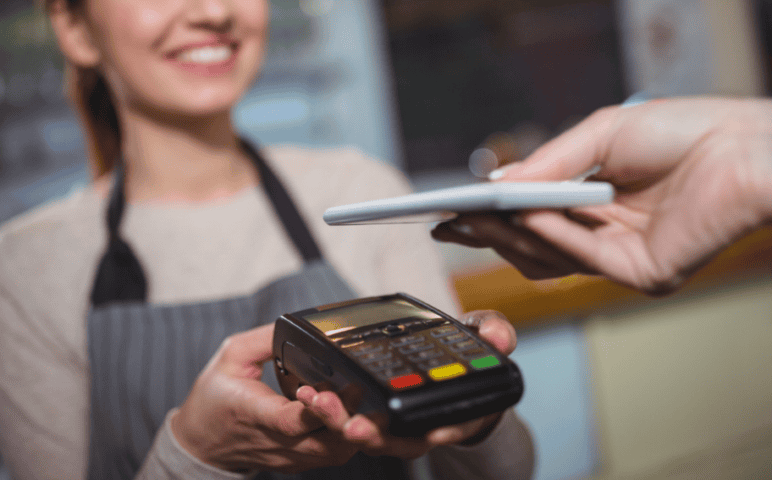
In the present generation of wireless payment devices, much of the remaining gap between mobile payment capability and terminal payment capability has been bridged, including support for chip cards (EMV), contactless NFC payments such as Apple Pay and Google Pay, and in some cases, even PIN transactions using debit cards. All of these functions can be supported by wireless devices small enough to be carried in a jacket pocket and linked up wirelessly by Bluetooth to a smartphone or tablet, which would act as the processor and interface for the transaction.
Purpose-built POS terminals capable of mobile operation but independent of smartphones are the high-end solution in the world of mobile payments and are fully-featured terminals complete with their own built-in screens, wireless communications, long-lasting batteries, and ruggedness required for outdoor, event, and field operations. These specialized mobile terminals have brought many of the advantages of fixed POS terminals into mobile payments by providing capabilities traditionally found in fixed terminals but in a portable form.
Square Reader and Dongle-Based Solutions
The dongle-based mobile card reader category, where a small card reading accessory connects to a smartphone or tablet through Bluetooth or a Lightning or USB-C port and uses the phone or tablet as the processing and display interface, remains the most accessible entry point to mobile payment acceptance for small businesses and individual service providers. Square Reader is the most widely recognized product in this category and remains a strong option for businesses at the early stage of their payment journey because of its zero-upfront-cost hardware, its intuitive app interface, its transparent flat-rate pricing that requires no merchant account application, and its broad acceptance of chip cards and contactless payments in its current hardware generation.
The limitations of the dongle approach in practice become evident where the solution is expected to operate in a high-volume or challenging environment, as in such situations the need for a user’s personal phone can cause battery issues; the card-and-phone combination results in awkwardness during transaction processing, and additional connectivity requirements of the Bluetooth device introduce an extra point of failure in comparison with stand-alone terminals. Mobile payments via a dongle should be considered only by merchants who are involved in a small number of transactions, rarely use mobile payments, or cannot afford other types of mobile terminals.
Standalone Mobile POS Terminals
Purpose-built standalone mobile terminals represent the most capable category of wireless payment devices for businesses with significant mobile payment needs, and their capabilities have expanded substantially as the technology has matured and as the competitive market between hardware providers has driven both capability improvement and cost reduction.
Devices including the Stripe Reader M2, the Square Terminal, the Clover Flex, and similar purpose-built mobile terminals offer self-contained payment processing with integrated screens that display the transaction interface without requiring a connected smartphone, built-in receipt printers in some models, cellular and Wi-Fi connectivity options that provide payment processing capability without depending on a phone’s data plan, and battery life that supports a full day of moderate-volume payment acceptance on a single charge.
The portable POS terminals belonging to this group have the capacity to process all types of current-day payment methods such as chip cards, contactless cards, digital wallets, as well as in some cases QR payments, and therefore provide a fully equipped solution for handling all kinds of payments, which can be taken around by a member of staff table-to-table, walk about on the festival site, or even deliver in case of a service call. There are various pricing models in place depending on whether one opts for an initial cost of buying the hardware, paying monthly rent on the equipment, or getting a service subscription which incorporates the cost of hardware with the cost of payments processing.
Connectivity Options and Reliability
The connectivity architecture of a mobile payment solution is one of the most important practical considerations for businesses that need reliable payment acceptance in environments where network conditions are variable or unpredictable. Mobile card reader solutions that depend entirely on cellular connectivity through a connected smartphone are subject to the signal quality limitations that affect cellular networks in specific locations, and a busy outdoor market in a signal-challenged location represents a genuine risk for payment solutions without offline capability.
Wireless payment systems that have offline transaction mode, in which the system will be able to record transactions without having access to a network and will be able to do processing of transactions offline in batch later, offer a safety buffer against any connectivity issues that may arise during mobile payment activities. The downside to using offline mode is that since the transaction will only get authorized offline, there is always the chance that the transaction might fail upon restoration of connectivity. Having said that, it is important for businesses to learn how to mitigate this issue.
Wi-Fi connectivity is one of the features available to stand-alone mobile terminals that allows the mobile terminal to use connectivity from a known source, whether at a permanent stall with a hotspot facility or perhaps outdoors at a restaurant table or even an event venue with Wi-Fi connectivity services. For businesses that do not have Wi-Fi connectivity, it is important to have dedicated cellular connectivity through a terminal instead of tethered connectivity to a smartphone.

Payment Processing Costs for Mobile Solutions
The payment processing economics of mobile payment solutions differ from fixed terminal processing in ways that are important to understand when evaluating the total cost of a mobile payment approach. Mobile card reader solutions from providers including Square and PayPal Here use simple flat-rate pricing where a single percentage applies to all card transactions regardless of card type, which makes cost calculation straightforward but may be more expensive than interchange-plus pricing for businesses with favorable card mixes.
The flat-rate simplicity trades potential cost optimization for predictability and ease of understanding, which is a reasonable tradeoff for businesses at the lower end of the volume range but becomes less attractive as transaction volume grows and the premium of flat-rate over interchange-plus pricing accumulates into significant annual cost. Portable POS terminal solutions from providers including Clover, Stripe, and others typically offer interchange-plus pricing options alongside flat-rate alternatives, providing the opportunity for cost optimization that matters more at higher volumes.
On-the-go payments processed through mobile terminals are subject to the same interchange rate structure as fixed terminal transactions for chip and contactless payments, which means that a well-configured mobile terminal processing proper chip or contactless transactions does not incur the card-not-present premium that manually keyed transactions attract.
Use Cases Where Mobile Payment Terminals Excel
Wireless payment devices add the most clear and most immediate value in specific business contexts where fixed payment infrastructure is either unavailable, impractical, or would create unnecessary customer friction. Mobile service businesses including plumbers, electricians, HVAC technicians, cleaning services, and personal care providers who complete work at client locations benefit from mobile payment capability that allows payment collection at the completion of each job rather than invoicing with delayed collection that creates cash flow gaps and administrative overhead.
Event and market vendors who need payment infrastructure at temporary locations without fixed electrical or network infrastructure benefit from standalone mobile terminals with cellular connectivity and battery operation that provide a complete payment solution without any venue infrastructure dependency. Tableside payment in restaurants and hospitality environments, where staff can process payment at the customer’s table rather than requiring customers to physically hand over cards that leave their sight, improves both the customer experience and the payment security of the transaction.
Delivery and field service operations where drivers and technicians need to collect payment at the point of service rather than returning to a home base for payment processing benefit from mobile card reader capability that extends payment infrastructure to wherever service is delivered. Queue-busting in retail environments where portable POS terminals allow additional payment processing capacity to be deployed wherever customer demand concentrates during peak periods provides throughput improvement that fixed terminal infrastructure at a single checkout counter cannot match.
Choosing the Right Mobile Payment Solution
Selecting the appropriate mobile payment solution for a specific business requires evaluating the actual payment scenarios the business encounters rather than selecting based on brand recognition or general category descriptions. The specific questions that determine the right solution include how many transactions per day need to be processed in mobile contexts, what the typical transaction size is, what connectivity conditions apply in the environments where mobile payment will be needed, whether the mobile payment need is occasional or continuous, what level of payment processing sophistication is needed in terms of reporting and integration with other business systems, and what the budget is for both hardware and ongoing processing costs.
Portable POS terminals that are purpose-built for high-volume continuous mobile payment operation are the appropriate choice for businesses where mobile payment is a primary and frequent activity, while simpler dongle-based solutions may be entirely adequate for businesses with occasional or low-volume mobile payment needs. On-the-go payments that need to integrate with inventory management, accounting software, or loyalty programs require solutions whose software ecosystem supports these integrations, which means evaluating the broader platform rather than only the hardware.
Conclusion
Mobile card reader technology and portable POS terminals have made genuine, full-capability payment acceptance truly location-independent, removing the fixed infrastructure dependency that previously limited card payment to businesses with permanent physical locations. Wireless payment devices in the current generation support the complete range of modern payment methods, provide connectivity options that work across diverse environments, and offer transaction speeds and customer experiences that are indistinguishable from fixed terminal experiences in most commercial contexts.
On-the-go payments that are reliable, secure, and professionally presented allow businesses to meet customers wherever commerce happens rather than requiring customers to come to the location where payment infrastructure exists, which is a competitive and customer experience advantage that compounds in value as consumer expectations of payment convenience continue to rise.


Leave a Reply