Menu

NFC payment terminals: The Fastest Way to Pay
By John Misarti May 11, 2026
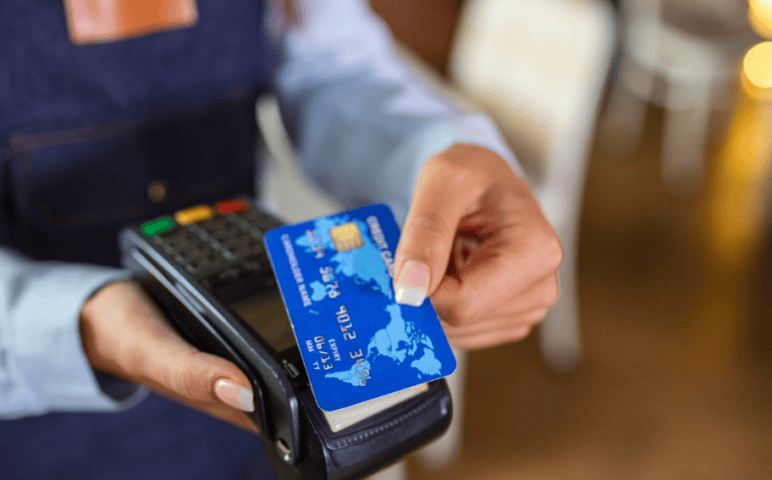
There is a moment at the checkout counter that most people know well. You have your items ready, the total is on the screen, and what happens next takes either two seconds or twenty depending on the payment method being used. With NFC payment terminals and contactless technology, that moment has been compressed into something that barely registers as a transaction at all. A quick tap, a beep, a green light, and it is done. No insertion, no waiting for chip processing, no PIN unless the amount is above the threshold, no signature, no paper receipt unless you specifically want one.
The whole process is so rapid and so seamless that it takes barely any effort from us to complete it during our busy days. And, it was not by chance either. Rather, this was made possible due to many years of advancements in payment technology, which all ultimately aimed at one single concept; creating the payment experience that feels as frictionless as possible for users.
Contactless payment systems such as NFC payment terminals have become mature enough that in most modern economies they have replaced any other payment devices, while many customers today get surprised when the merchants they work with are not yet able to use contactless card payments. Knowing how contactless payment systems function, why they are so ubiquitous today, and what their future looks like can be really helpful both for businesses and for individual consumers.
What NFC Actually Is and How It Works
Near-field communication is a radio frequency technology that enables two devices to exchange small amounts of data when they are brought within a few centimeters of each other. The technology is part of the broader RFID family, which has been used in applications like inventory tracking and access cards for decades, but NFC has specific characteristics that make it particularly well suited to payment applications.
The very short effective range of NFC, typically four centimeters or less, is a design feature rather than a limitation, because it means that the communication can only happen when the user deliberately brings their device into close proximity with the terminal, which provides a natural layer of physical security against unintended or unauthorized transactions.
Upon tapping the contactless card or phone at the NFC payment terminal, the exchange of information takes place between the card/phone and the terminal where a payment token is used instead of a card number. This is achieved through complex cryptography-based algorithms that ensure the uniqueness of each token, thus providing security that NFC payment systems possess but conventional methods lack.
Upon receiving this token, the terminal sends it further to the payment processor who, together with the card network and issuer, verifies the token, and the authorization is sent back to the terminal in less than a second. What makes this process truly outstanding from an engineering standpoint is that the exchange takes place within less than a second, equivalent to a single breath. It only becomes apparent when it takes longer than usual because something goes wrong in the middle.
The Evolution From Swipe to Chip to Tap
Understanding where NFC payment technology sits in the history of payment technology requires a brief look at what came before it and why each successive generation of technology was necessary. Magnetic stripe cards dominated in-person payments for decades and were revolutionary in their time, providing a reliable electronic payment method that worked across millions of merchant locations. The fundamental weakness of magnetic stripe technology, which would eventually lead to its replacement, is that the same static data is transmitted in every transaction.
A card number captured once from a magnetic stripe is as useful for fraud as if it were captured every time. When criminals developed reliable methods for capturing this static data through card skimmers attached to payment terminals and ATMs, the vulnerability became economically unsustainable, and the card industry moved to EMV chip technology as the replacement. EMV chips addressed the static data problem by generating a unique cryptographic authentication code for each transaction, making captured data useless for subsequent fraud. The chip was a genuine security improvement, but it came with a user experience cost.
Chip transactions required card insertion, waiting while the chip authenticated with the terminal, and in many implementations PIN entry, adding seconds to a transaction that had previously taken a single swipe. Tap to pay technology preserved all of the security benefits of chip-based authentication while dramatically improving the user experience by eliminating the insertion and waiting steps. The contactless transaction achieves the same cryptographic security as a chip transaction but delivers it in a form that is faster than a magnetic stripe swipe, which represents a meaningful advance because it demonstrates that security and convenience are not fundamentally in conflict.
NFC Payment Terminals: The Merchant Side of the Equation
For businesses, the decision to deploy NFC payment terminals is both a technology investment and a customer experience decision that has become increasingly straightforward as the technology has matured and the cost of capable hardware has declined. Modern NFC payment terminals are available across a wide range of form factors, from compact mobile card readers that connect to smartphones and tablets to full-featured countertop terminals and integrated POS systems, all of which include NFC capability as standard rather than as an upgrade option.
The efficiency gains offered by fast checkout processes that leverage NFC technology become more obvious in settings that see high levels of traffic and where transaction time has a direct effect on how many people can be processed in an hour. A coffeehouse that processes one hundred transactions during the morning rush period, a supermarket that operates multiple checkouts, and even a transit authority dealing with fare transactions for thousands of commuters each day will realize significant improvements in their operations through the adoption of NFC technology, which reduces transaction times by two to four seconds compared to fifteen to thirty seconds.
For small businesses, it may not be as much about processing customers as it is about giving a clear signal to the customer that they can expect a smooth process without having to deal with outdated or clunky payment options. Businesses that invest in good payment technology are telling their customers that they are professional enough to make that investment and consider their needs when doing business.
Contactless Card Payments: The Card Network Perspective
Contactless card payments have been a priority investment area for Visa, Mastercard, American Express, and Discover for over a decade, and the card networks’ sustained commitment to expanding contactless infrastructure has been a major driver of the technology’s adoption. The card networks’ interest in contactless is straightforward: faster transactions mean more transactions per unit of infrastructure, which translates to higher payment volumes and higher interchange revenue.
The networks have supported contactless adoption through several mechanisms including setting liability rules that incentivize merchants to upgrade their terminals, investing in consumer education campaigns that introduced the contactless symbol and explained how to use it, and working with issuing banks to ensure that a high proportion of cards in circulation have NFC capability. The transaction limit rules that govern contactless card payments without PIN entry vary by country and are set by a combination of card network policy and local regulatory preference.
In many markets including the United Kingdom, Australia, and Canada, contactless limits have been progressively raised over time as fraud data has validated that the risk of large contactless transactions is manageable with current security infrastructure. The result across most developed markets is a contactless card payments ecosystem where the majority of new card issuances include NFC capability and where the proportion of in-person transactions completed by tap continues to grow as consumer habit formation around the technology deepens.
Digital Wallets and the Smartphone as a Payment Device
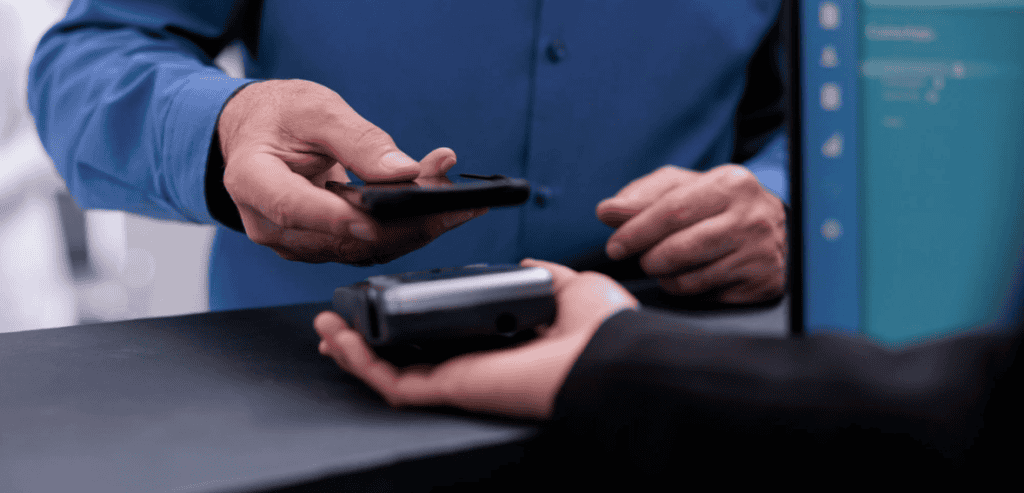
The integration of NFC payment technology with smartphones and wearable devices through digital wallet platforms has added a dimension to contactless payments that extends beyond convenience to genuine capability expansion. Apple Pay, Google Pay, and Samsung Pay function by securely storing payment card credentials on the device and presenting them at NFC payment terminals through the same token-based system that physical contactless cards use.
From the merchant terminal’s perspective, a payment from an iPhone using Apple Pay is technologically identical to a payment from a physical Visa contactless card, which is one of the reasons digital wallet adoption has been able to scale without requiring merchants to make additional infrastructure investments beyond the NFC payment terminals they were already deploying.
The added capabilities that digital wallets provide beyond the card itself include the ability to store multiple cards and switch between them, automatic card credential updates when a card is reissued without requiring the user to re-enter card details, in-app transaction history and financial management tools, and the integration of loyalty programs and offers that can be activated and redeemed at the point of payment without a separate loyalty card or app interaction.
Wearable devices including smartwatches have extended this capability to the wrist, which has proven particularly popular for use cases where carrying a phone or wallet is inconvenient, including exercise, outdoor recreation, and situations where clothing choices limit pocket space. Tap to pay technology has therefore expanded from a card feature to a capability available through essentially any NFC-enabled device the consumer might have with them.
Security Architecture: Why Contactless Is Safer Than Many Think
The perception that contactless payments are less secure than chip-and-PIN is widespread and understandable given that removing the PIN requirement seems like a reduction in security layers. The reality is more nuanced and ultimately more reassuring for consumers who understand how the security architecture works. The primary security mechanism in tap to pay technology is the same cryptographic token system used in chip cards, which makes captured transaction data useless for fraud regardless of the transaction amount or the absence of PIN authentication.
The additional security provided by PIN authentication is meaningful but is specifically protection against a scenario where the physical card or device has been stolen and the thief is attempting to use it for high-value transactions. For most contactless transactions below the local threshold, the fraud risk profile is actually lower than for traditional card transactions because the tokenization prevents the creation of counterfeit cards from captured transaction data, which was the primary fraud vector against magnetic stripe technology.
The concern about unintended NFC payments, sometimes described as drive-by payments where a reader captures payment from a card in a wallet without the cardholder’s knowledge, has proven to be largely theoretical rather than a real-world risk. The short effective range of NFC and the requirement for deliberate presentation to a certified payment terminal make this scenario extremely difficult to execute in practice, and the card networks’ fraud monitoring systems would flag and reverse any such transaction that did somehow occur. Fast checkout systems based on NFC are therefore not a security compromise but a security advance delivered alongside a user experience improvement.
Transit and High-Volume Applications
Public transit systems have become one of the most significant deployment environments for NFC payment technology, and their adoption of contactless payments has had a meaningful influence on consumer familiarity with the technology outside the traditional retail context. Transit fare collection has historically involved either cash or proprietary fare cards with their own topping-up requirements and balance management, which creates friction and administrative overhead for transit authorities.
Open-loop contactless payment systems that allow commuters to tap a standard bank-issued contactless card or digital wallet directly on fare gates have been implemented in major cities including London, New York, Sydney, Singapore, and dozens of others, with results that demonstrate both the technical reliability and the consumer acceptance of NFC payment technology at very high transaction volumes. The London Underground processes millions of contactless fare transactions daily, making it one of the highest-volume NFC payment environments in the world and a significant demonstration of the technology’s scalability and reliability under demanding conditions.
The transit context is also interesting because it introduces consumers to contactless payment in a low-stakes, high-repetition environment that builds familiarity and comfort with tap to pay technology that then carries over to retail and other payment contexts. Commuters who tap their phone or card on the transit gate twice a day develop a reflex for contactless payment that makes the same behavior at a coffee shop or grocery store feel natural and expected rather than novel.
Fast Checkout Systems and the Retail Experience
The integration of NFC payment technology into comprehensive fast checkout systems represents the most complete expression of what tap to pay technology can enable for retail operations. Beyond the basic contactless payment function, modern fast checkout systems combine NFC payment terminals with mobile POS software, digital receipt delivery, integrated loyalty program tracking, and customer-facing displays that create a checkout experience that is not just faster than traditional payment but qualitatively different in the richness of the interaction it enables.
Staff who are equipped with handheld NFC payment terminals can process transactions anywhere in the store, eliminating the fixed checkout counter as the only possible payment location and enabling queue-busting strategies where additional payment capacity is deployed wherever customer demand is concentrated at any moment. This mobility has proven particularly valuable in food service environments where table-side payment is a significant customer experience improvement, in retail settings where long checkout queues are a persistent problem, and in outdoor and event retail where fixed infrastructure is not available or practical.
The customer-facing component of fast checkout systems has also evolved to include self-checkout stations equipped with NFC payment terminals that allow customers to complete their own transactions without staff assistance, which represents the same underlying philosophy of removing friction from the payment interaction by allowing customers to pay in the way and at the time that is most convenient for them.
Global Adoption and What It Looks Like Market by Market
The global picture of NFC payment technology adoption reflects both the technology’s genuine advantages and the market-specific factors that have shaped how quickly and how comprehensively different countries have embraced contactless payments. The United Kingdom consistently ranks among the world leaders in contactless payment adoption, driven by aggressive infrastructure investment by the card networks and banks, progressive increases in contactless transaction limits, and the familiarity that transit system usage has generated among a large portion of the population.
Australia has similarly high adoption driven by widespread merchant terminal deployment and strong digital banking infrastructure. Canada, the Netherlands, and the Scandinavian countries are among the other high-adoption markets where contactless payments have become the default expectation rather than an option. The United States has seen significant growth in contactless adoption over recent years, driven primarily by digital wallet adoption among smartphone users and the broad deployment of NFC-capable terminals across retail environments.
Emerging markets where traditional card infrastructure was less entrenched have in some cases leapfrogged directly to mobile payment technologies that use QR codes rather than NFC, which represents a different contactless payment architecture that has achieved high adoption in China, India, and parts of Southeast Asia and Africa. The global direction is consistent regardless of the specific technology path each market has taken: physical cash and magnetic stripe cards are in structural decline, and the various forms of fast, frictionless digital payment are in sustained growth.
Conclusion
NFC payment terminals and contactless card payments have transformed the in-person payment experience in ways that are now so familiar in many markets that they have become the baseline expectation rather than the distinguishing feature. Tap to pay technology that seemed novel when it first appeared in consumer settings has become ordinary in the best possible sense, a reliable, fast, and secure payment interaction that works consistently enough to be taken for granted.
Fast checkout systems built on NFC infrastructure have demonstrated at enormous scale that payment security and payment convenience are not competing values, that the transaction experience can be made genuinely better for both merchants and customers without any compromise to the fraud prevention that makes electronic payments trustworthy.
The continued evolution of this technology toward more capable devices, more integrated loyalty and financial management features, and more diverse environments including transit, parking, vending, and unattended retail suggests that the role of contactless payment in daily life will expand rather than stabilize as the infrastructure matures and consumer comfort with the technology deepens across demographics and markets. For businesses, the investment in NFC payment infrastructure is no longer a forward-looking decision about future consumer preferences. It is a present-day necessity driven by existing expectations that show no sign of reversing.


Leave a Reply