Menu

Why Encryption Is Non-Negotiable for Small Business Card Readers
By John Misarti May 21, 2025
One of the most significant challenges of operating a small business is securely accepting payments. Whether you run a service-based business, food truck, salon, or boutique, how you handle payments shows your professionalism and has a direct effect on client trust. Of the numerous components of a secure transaction, encryption is by far the most important. It is not a luxury feature or an option. It is an absolute necessity for anyone who uses a small business card reader.
Even small retailers and service providers are targets of the growing cyber threats. Large corporations are no longer the only target of hackers. In reality, because small businesses typically have less effective cybersecurity procedures, they are often at higher risk. This makes having encrypted credit card terminals and other secure payment tools more than just smart; it makes them vital.
The Growing Threat of Data Breaches in Small Business
It is a common misconception among small business owners that they are too small to draw the attention of hackers or cybercriminals. Unfortunately, there is a risky blind spot created by this belief. Numerous cybersecurity studies indicate that small businesses are the target of almost half of all cyberattacks. The explanation is simple: smaller businesses often lack the resources, time, and experience necessary to put in place strict security measures.
Payment information is particularly useful. Sensitive data, including card numbers, expiration dates, and CVV codes, may be revealed when consumers swipe, dip, or tap their cards on a small business card reader if the device is not adequately encrypted. Customers and business owners are at risk if this data is subsequently intercepted, sold, or used for fraudulent transactions.
The fallout from a breach can be devastating. It may include fines, chargebacks, reputational damage, and even the loss of the ability to process card payments altogether. Encryption is the frontline defense against such outcomes.
What Encryption Actually Means in Card Readers
Encryption, in the context of payment processing, is the process of converting sensitive data into unreadable code at the moment of transaction. When a customer inserts their card into a terminal, the encrypted credit card terminal immediately secures that data before it travels through any network. In practice, this means that even if someone intercepts the data while it is being transmitted, it will appear as scrambled text that cannot be decoded without the right decryption key. The encrypted data remains unreadable until it reaches the payment processor’s secure environment, where it is decrypted and authenticated.
There are two major types of encryption often discussed in this context:
Point-to-point encryption
End-to-end encryption
Both are used to protect payment data, but P2PE is widely considered the gold standard. It ensures that the data is encrypted at the moment the card is read and remains secure until it reaches the processing endpoint. When selecting a small business card reader, it is crucial to understand which encryption method is used and ensure that it meets industry standards such as PCI DSS.
The Role of Encrypted Credit Card Terminals
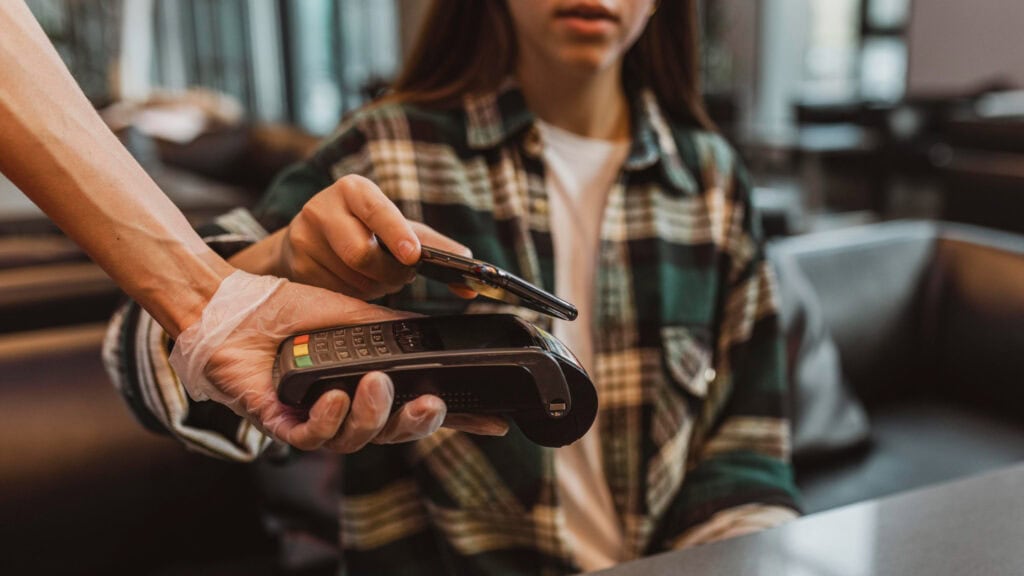
Encrypted credit card terminals are essential for small businesses to protect consumer data and stop fraud. Modern terminals have encryption built right into the hardware, unlike low-end or older models that might not have robust security features. This makes it nearly impossible for attackers to steal useful information because the data is never in plain text.
For companies that depend on in-person transactions, these terminals are particularly crucial. Secure card readers that adhere to modern security standards are advantageous for eateries, coffee shops, pop-up shops, and retail establishments.
Chip cards, which are by nature more secure than magnetic stripe cards, and contactless payments are also supported by an encrypted terminal. As more customers switch to mobile wallets and tap-to-pay methods, having terminals that encrypt these transactions as well becomes even more important. Investing in the right terminal isn’t just about security. It also improves trust. Customers are more likely to return to businesses where they feel their data is being handled responsibly.
Why Tokenization and Encryption Work Together
Alongside encryption, many secure payment tools also use tokenization. This process replaces sensitive card information with a randomly generated token that has no real value. These tokens are used to complete the transaction and are meaningless outside of that specific context. Tokenization adds another layer of protection by ensuring that even if a system is breached, no actual card data is exposed. When encryption and tokenization are used together, the result is a highly secure payment environment that protects both sides of the transaction.
This is especially useful for small businesses that offer recurring payments, memberships, or digital invoicing. Instead of storing card numbers, the system stores tokens that can be reused safely for future billing. When evaluating payment providers, it is wise to confirm that their solutions use both encryption and tokenization to safeguard all customer interactions.
Meeting Compliance Requirements with Secure Payment Tools
Reducing risk is not the only benefit of using secure payment methods. It has to do with compliance as well. Merchants are required to adhere to stringent standards set by card networks and payment processors. Penalties, increased transaction fees, or even the closure of your merchant account may follow noncompliance with these requirements.
The standard for secure card handling is established by PCI DSS. A key component of fulfilling this requirement is encryption. Small businesses can steer clear of many of the liabilities that come with non-compliance by selecting certified and compliant card readers and terminals.
It’s also important to remember that certain industries have extra requirements for compliance. For instance, when it comes to patient billing, healthcare providers also need to take HIPAA into account. Payment-processing educational institutions are required to remain in compliance with FERPA. Using encrypted readers and secure gateways helps fulfill these legal obligations without adding unnecessary complexity.
Benefits Beyond Security
While the main purpose of encryption is to protect sensitive data, there are other advantages to using modern encrypted credit card terminals and secure systems. Speed is one of them. Modern terminals process payments faster because they are built to handle EMV chip cards, contactless payments, and mobile wallets efficiently. That means less time at checkout, shorter lines, and a smoother customer experience.
Another benefit is integration. Many secure readers work seamlessly with point-of-sale systems, inventory management software, and accounting platforms. This simplifies reconciliation, reduces manual entry, and saves valuable time. Encrypted payment tools also provide detailed reporting features that can help business owners analyze sales patterns, identify busy periods, and plan staffing accordingly. These insights are a valuable part of running a lean, efficient business.
Choosing the Right Small Business Card Reader
It can be overwhelming to choose a small business card reader with so many options available. The secret is to put dependability, security, and compliance ahead of affordability. Budgetary concerns are important, but sacrificing security can ultimately result in far greater financial losses. Examine suppliers who focus on small business solutions first. Seek out terminals that make it obvious that they are PCI compliant and use encryption. Verify that the hardware accepts contactless payments and is EMV certified.
Take into account the system’s compatibility with your current tools as well. Verify that the card reader or payment gateway can connect to any accounting or CRM software you currently use. Ask about tokenization features, recurring billing support, and how customer data is stored. These questions will help ensure that you’re not only getting a tool for today’s needs but one that can scale with your business.
Cloud-Based Payment Systems and Remote Security
Many small businesses now operate with some level of remote work or mobile service. Contractors, consultants, delivery services, and event vendors often need to process payments in the field. Cloud-based payment platforms with encrypted mobile readers allow these businesses to accept payments on-site while still maintaining high levels of security. These mobile systems encrypt data on the device and transmit it securely through the cloud, allowing real-time reporting and centralized oversight.
This flexibility supports business continuity, especially in industries that require travel or decentralized service delivery. It ensures that even when teams are on the move, payment security is not compromised.
The Customer Perspective: Building Trust Through Security
Customers today are more aware of cybersecurity risks than ever before. News stories about data breaches and identity theft have made the public cautious. They are looking for signs that their information is being protected when they do business with a company. A secure, professional payment process signals that your business takes privacy seriously. Using branded payment terminals, offering digital receipts, and providing contactless options all contribute to a more modern and trustworthy customer experience.
In an environment where trust is a key differentiator, demonstrating secure practices can improve reputation and encourage repeat business.
Conclusion
Nowadays, encryption is not a feature in the digital economy. It is necessary. To protect consumer information and business operations, it is essential for any company that uses a small business card reader to make sure that transactions are encrypted from the start. Secure payment methods and encrypted credit card terminals lower the possibility of fraud, streamline compliance, and boost consumer trust. Through improved integrations and real-time data, they also facilitate business growth and streamline operations.
One of the best things small business owners can do is to invest in secure payment infrastructure. It safeguards your most valuable assets, including your revenue, reputation, and client relationships. Encryption will continue to be central to secure commerce as technology advances. Make sure your business is equipped not just to accept payments, but to do so responsibly, reliably, and securely.


Leave a Reply